Black Monday
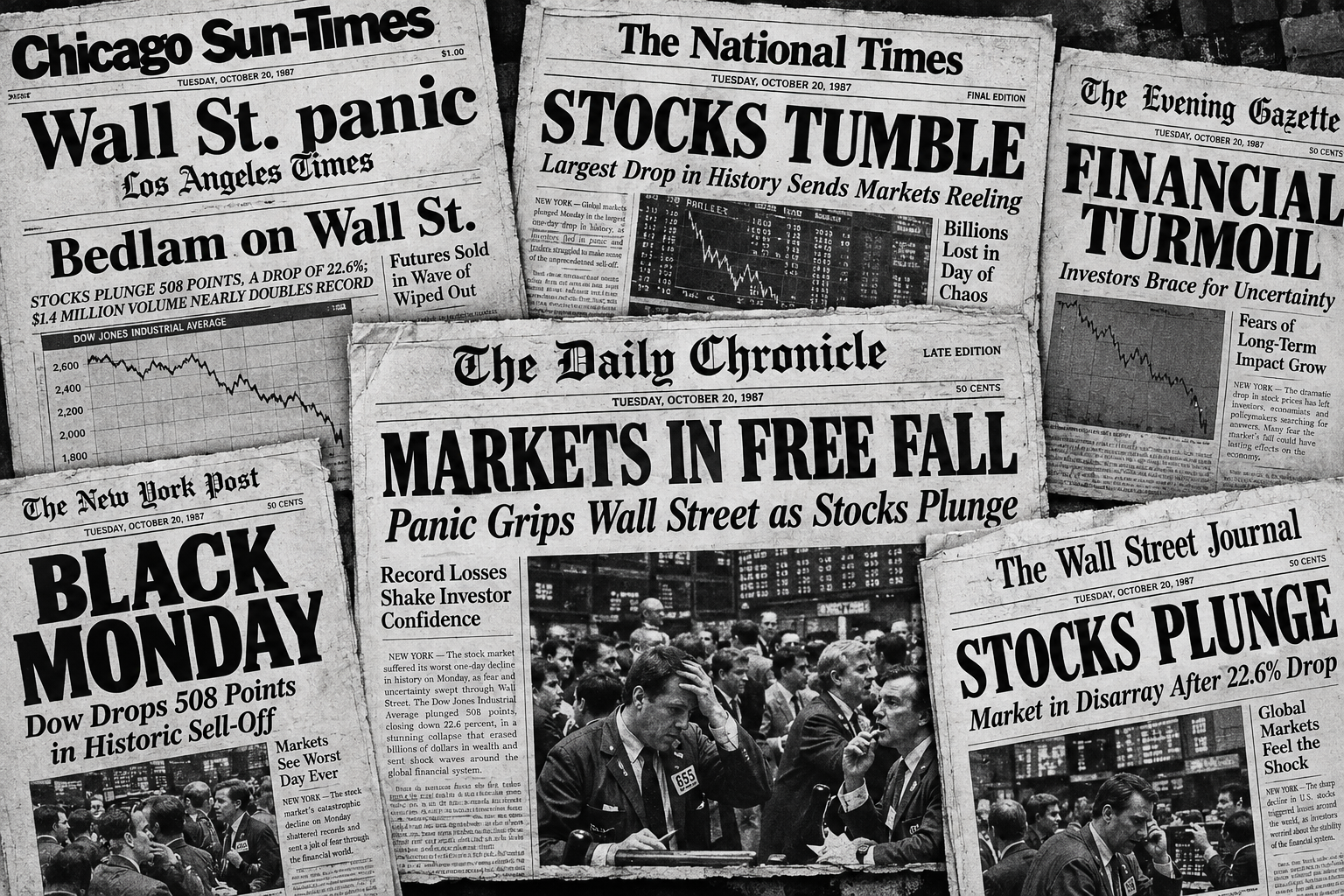
This past Monday, October 19, 2026, marked the 40th anniversary of what became known as Black Monday, when the broad equity market fell over 20% in a single day, the largest one-day percentage drop in history. That was after it fell about 10% over the previous three trading days. For those of us still early in our financial services careers, it was an exhausting and eye-opening lesson in the volatility of the stock market.
The causes of the 1987 sell-off were numerous and sound vaguely familiar. After a five-year bull market in which U.S. and global markets made substantial gains, speculative tendencies among investors were pervasive as everyone wanted to join in the fun. Two things happened on Wednesday October 14 that began the end of the party. First, the U.S. House Committee on Ways and Means introduced a bill to reduce tax benefits associated with mergers and leveraged buyouts. Later that same day, the Commerce Department announced unexpectedly high trade deficit figures which caused a sell-off in the U.S. dollar, an increase in interest rates and downward pressure on stock prices. By Friday U.S. markets were down double-digits for the week, and everyone wondered if the weekend might give a pause to refresh.
Unfortunately, the worst was yet to come. Significant selling on Monday created steep price declines throughout the day, particularly during the last 90 minutes of trading. Deluged with sell orders, many stocks on the NYSE (New York Stock Exchange) halted or delayed trading. Markets were so unstable, concerns mounted about possible collapses of brokerage firms and trading specialists. Sale orders from mutual fund investors poured in, exceeding the available cash on hand within many funds, forcing them to liquidate holdings, further exasperating the situation. By Tuesday, October 20, the Federal Reserve, lead by Chairman Alan Greenspan, began injecting liquidity into the banking system trying to calm markets. While it helped prevent further panic, the slide continued until November, when the S&P 500 finally bottomed out, down 31.6% from its August high.
One factor in the selloff was that by 1987, do-it-yourself investing had gained popularity, and many DIY investors, left to their own counsel, unfortunately decided to sell during a time of great opportunity. Unlike the crash of 1929, which contributed to the Great Depression, the 1987 crash did not result in a period of prolonged economic decline, eventually recovering its losses within about two years. Part of this was due to the swift action by the Federal Reserve to calm markets and later, circuit-breakers implemented by the NYSE which were designed to halt trading and prevent a market meltdown.
Some takeaways from the 40th anniversary of Black Monday are: (1) markets can be very volatile in the short term, (2) factors that influence market movements are almost always unexpected, and (3) understanding the difference between saving, investing and speculating is critical to your long-term success. Trying to time markets, buying on margin, day trading, trading options or futures, or concentrating in a few companies you hope will outperform the broad market is speculating, not investing. Building and committing to a broadly diversified portfolio of great companies, although subject to short-term volatility, has historically been a prudent way to grow your wealth and ultimately your income from rising dividends. It may also help to remember that you save for a rainy day but invest for the future.
Sam Taylor, CIMA®, AIF®, CRPC®